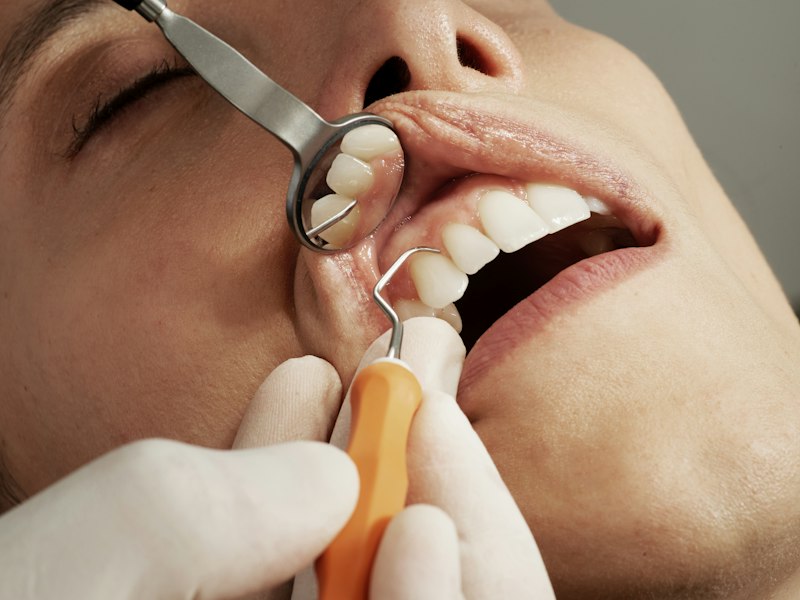
Gum disease is the most common chronic inflammatory condition in the United States, affecting nearly half of adults over 30. Despite its prevalence, most people with gum disease don't know they have it — because in its early stages, it is often painless. At Churchville Dental Care, we screen every patient for gum disease at every visit, because early detection is the difference between a simple cleaning and complex treatment.
What Is Gum Disease?
Gum disease — also called periodontal disease — is a bacterial infection of the tissues that support your teeth. It begins as gingivitis, a mild inflammation of the gums caused by plaque buildup. If left untreated, gingivitis progresses to periodontitis, a more serious infection that destroys the bone and connective tissue holding teeth in place. Advanced periodontitis is the leading cause of tooth loss in adults.
Warning Signs of Gum Disease
Many patients are surprised to learn they have gum disease because it often causes no pain. Watch for these warning signs:
- Gums that bleed when you brush or floss (the most common early sign)
- Red, swollen, or tender gums
- Gums that have pulled away from your teeth (recession)
- Persistent bad breath that doesn't improve with brushing
- Teeth that feel loose or have shifted
- Pus between your teeth and gums
- Changes in how your teeth fit together when you bite
- Sensitive teeth or pain when chewing
Stages of Gum Disease
Gum disease progresses through distinct stages. Gingivitis is the earliest and most reversible stage — gums are inflamed and bleed easily, but no bone loss has occurred. With proper treatment and improved home care, gingivitis can be completely reversed. Early periodontitis involves the beginning of bone loss around teeth. Pockets (spaces between teeth and gums) deepen to 4–5mm. Moderate periodontitis involves significant bone loss and deeper pockets (5–7mm). Advanced periodontitis involves severe bone loss, deep pockets (7mm+), tooth mobility, and high risk of tooth loss.
Gum Disease Treatment Options
Treatment depends on the stage of disease. For gingivitis, a professional cleaning combined with improved home care (brushing twice daily, flossing daily) is often sufficient to reverse the condition. For early to moderate periodontitis, scaling and root planing (deep cleaning) removes tartar and bacteria from below the gum line. This is typically done in two appointments, one side of the mouth at a time, under local anesthesia. For advanced periodontitis, additional treatments may include antibiotic therapy, laser treatment, or referral to a periodontist for surgical intervention. After active treatment, most patients require maintenance cleanings every 3–4 months rather than the standard 6-month interval.
Gum Disease and Your Overall Health
Research has established strong links between periodontal disease and systemic health conditions including heart disease, diabetes, stroke, respiratory disease, and adverse pregnancy outcomes. Bacteria from infected gums can enter the bloodstream and trigger inflammation throughout the body. Treating gum disease has been shown to improve blood sugar control in diabetic patients and reduce cardiovascular risk markers. Your oral health is inseparable from your overall health. Churchville Dental Care screens every patient for gum disease at every visit and provides comprehensive periodontal care for patients across Harford County including Churchville, Bel Air, Aberdeen, Joppa, Edgewood, and Forest Hill.
Frequently Asked Questions
Can gum disease be cured?
Gingivitis (early gum disease) is completely reversible with professional treatment and improved home care. Periodontitis (advanced gum disease) cannot be cured but can be controlled with regular treatment and maintenance. Once bone loss occurs, it cannot be fully restored without surgical intervention.
Does gum disease treatment hurt?
Deep cleaning (scaling and root planing) is performed under local anesthesia, so you should not feel pain during the procedure. Some soreness and sensitivity for a few days afterward is normal. Most patients find the procedure much more comfortable than they expected.
How much does gum disease treatment cost in Maryland?
A deep cleaning (scaling and root planing) typically costs $200–$400 per quadrant in Maryland, or $800–$1,600 for the full mouth. Most PPO dental insurance plans cover deep cleaning at approximately 80% after your deductible.
How do I know if I have gum disease?
The most reliable way to know is a professional examination. Your dentist will measure the depth of the pockets around each tooth with a periodontal probe. Pockets deeper than 3mm indicate gum disease. Bleeding during probing is also a key diagnostic indicator.
Can gum disease cause tooth loss?
Yes — advanced periodontitis is the leading cause of tooth loss in adults. As the disease destroys the bone and connective tissue supporting teeth, teeth become loose and eventually require extraction. This is why early treatment is so important.